Why a Capable Body Is More Attractive Than a Perfect Body
People Notice More Than Muscles
When conversations about physical attractiveness come up, most people immediately think about appearance. They think about body fat percentages, visible abs, jawlines, fashion, height, or other physical characteristics that dominate social media feeds and fitness advertisements.
Yet in everyday life, attraction often works differently.
People rarely walk around evaluating each other like judges in a bodybuilding competition. Instead, they unconsciously pick up on signals. They notice posture. They notice energy. They notice movement. They notice confidence. They notice whether someone appears healthy, capable, and comfortable in their own body.
This is why some individuals command attention despite not having model-level looks, while others with objectively attractive features struggle to create the same impression. Human beings are remarkably sensitive to nonverbal cues. Long before someone speaks, observers are already forming impressions based on how they carry themselves.
A body that looks capable sends a message that goes beyond aesthetics. It suggests strength, vitality, resilience, and self-respect. Those qualities have always been attractive because they communicate something deeper than appearance alone.
Throughout History, Capability Mattered More Than Perfection
For most of human history, physical capability was not a hobby. It was a necessity.
People walked long distances, carried heavy loads, built homes, worked fields, hunted, protected families, and performed physically demanding tasks as part of everyday life. A strong body was not primarily associated with appearance; it was associated with survival and contribution.
Even though modern life has changed dramatically, human psychology has not evolved at the same pace. Deep within us remains an appreciation for physical competence.
When we see someone with strong legs, good posture, balanced movement, and visible energy, our brains often interpret those signals positively. We associate them with health, reliability, and effectiveness.
Interestingly, these impressions are not always conscious. Most people could not explain exactly why one person appears more attractive than another. They simply feel it.
Often what they are responding to is not beauty in the conventional sense but evidence of capability.
Strong Legs Tell a Story
In fitness culture, much attention is given to upper-body development. Social media is filled with chest workouts, arm workouts, and shoulder workouts.
Yet strong legs may be one of the most underrated indicators of physical capability.
Leg strength is closely connected to mobility, balance, endurance, athletic performance, and long-term health. It reflects the ability to move through the world effectively.
When someone walks with stability and confidence, there is often an unconscious perception of competence. Their movement appears intentional rather than hesitant. They occupy space naturally rather than awkwardly.
Research in exercise science consistently shows that lower-body strength contributes significantly to overall physical function and healthy aging. In practical terms, strong legs support everything from recreational activities to injury prevention and long-term independence.
People may not consciously think, "That person probably has excellent lower-body strength." What they notice is the outcome: energy, confidence, and effortless movement.
Broad Shoulders Are About More Than Appearance
Broad shoulders have long been associated with attractiveness, but the reason goes beyond aesthetics.
Shoulders contribute to the visual impression of strength and physical readiness. Throughout human history, strength was linked to the ability to provide, protect, and contribute to a community. Those associations still influence perception today.
However, broad shoulders alone are not enough.
A person with impressive physical features but poor posture often creates a weaker impression than someone with average features who stands confidently and moves well. The body communicates through the whole package, not isolated measurements.
The attraction comes from what the shoulders symbolize: capability, stability, and physical presence.
These qualities are often perceived before a single word is spoken.
Posture Changes How Others See You—and How You See Yourself
Posture is one of the most overlooked aspects of physical attractiveness.
Good posture does not require expensive equipment, exceptional genetics, or years of training. Yet it dramatically influences first impressions.
Someone who stands upright, maintains balanced alignment, and moves confidently tends to appear more energetic, trustworthy, and self-assured. Conversely, slouched posture can communicate fatigue, uncertainty, or disengagement even when none of those things are actually true.
Psychology researchers have long been interested in the relationship between body language and perception. While posture alone cannot transform a person's life, it influences how people interpret confidence and presence.
More importantly, posture affects personal experience as well. Many people report feeling more alert, focused, and confident when they improve how they carry themselves physically.
The body and mind constantly influence one another. Improving one often benefits the other.
Easy Movement Signals Health
One of the most attractive physical qualities is surprisingly simple: moving well.
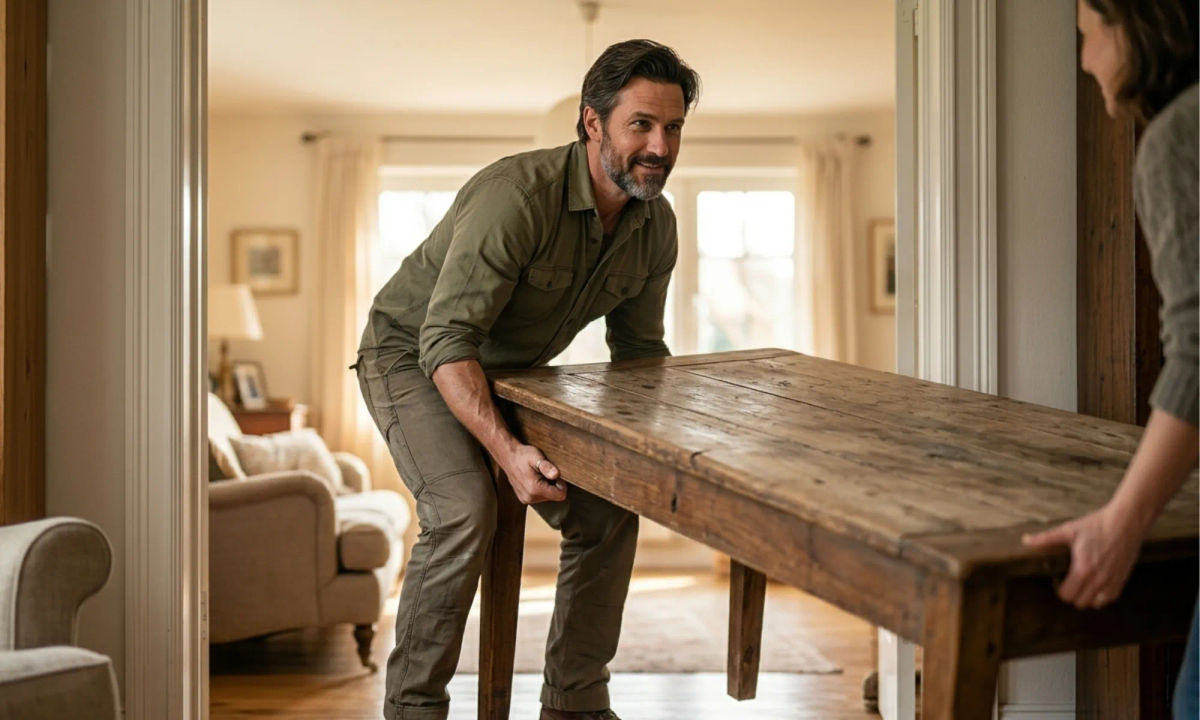
Watch someone effortlessly climb stairs, carry groceries, play with children, hike a trail, participate in sports, or perform daily activities with energy and coordination. There is something naturally appealing about competence in motion.
Modern fitness culture sometimes focuses heavily on appearance while neglecting function. Yet functionality is what people interact with in real life.
Nobody experiences another person's abs during a conversation. They experience their presence, energy, confidence, movement, and behavior.
Easy movement suggests that a person takes care of themselves. It communicates vitality and capability without needing to say a word.
Perhaps this is why many athletes appear attractive even outside their sport. Their appeal often comes from how they move rather than simply how they look.
Discipline Leaves Physical Clues
A capable body is rarely built by accident.
It is usually the result of repeated choices made over time. Consistent exercise. Adequate sleep. Nutritious food. Patience. Persistence. Recovery. Self-control.
These habits leave visible traces.
When people admire a healthy physique, they are often responding not only to the physical result but also to the qualities that produced it. Discipline, commitment, and consistency are inherently attractive traits because they tend to influence many areas of life beyond fitness.
Someone who demonstrates discipline in health may also demonstrate discipline in work, relationships, finances, or personal goals.
The body becomes a visible reflection of invisible habits.
That is why physical fitness frequently communicates more than appearance alone.
Self-Respect Is Often Visible
Perhaps the deepest reason a capable body is attractive is that it often reflects self-respect.
Taking care of one's physical health sends a message: "I believe I am worth investing in."
This mindset extends beyond exercise. It influences sleep habits, nutrition, boundaries, stress management, and overall well-being.
People who respect themselves tend to make decisions that support long-term growth rather than immediate gratification. Over time, those decisions become visible in both physical appearance and personal presence.
Self-respect is difficult to fake because it emerges through consistent behavior. The body often becomes one of the places where those behaviors are most clearly expressed.
This does not mean everyone needs to be exceptionally fit. It means there is something appealing about seeing evidence that a person values their own health and well-being.
The Goal Is Capability, Not Perfection
Modern culture often promotes unrealistic physical ideals. Social media can create the impression that attractiveness requires extraordinary genetics, extreme leanness, or a flawless appearance.
Fortunately, real life is much more forgiving.
Most people are not looking for perfection. They are looking for signals of health, vitality, confidence, and self-respect.
A capable body does not need to be perfect. It simply needs to function well.
It can walk, lift, carry, climb, play, work, explore, and engage fully with life. It allows a person to participate rather than merely observe.
That form of fitness tends to remain valuable throughout every stage of life.
Unlike trends, it never goes out of style.
Final Thoughts
The most attractive physical quality a man can possess is not necessarily a specific muscle group, body fat percentage, or aesthetic standard. It is the impression that his body is capable.
Strong legs suggest strength and endurance. Broad shoulders suggest presence and stability. Good posture communicates confidence. Easy movement reflects health and vitality.
Together, these qualities tell a story.
They suggest discipline rather than laziness, action rather than passivity, and self-respect rather than neglect. More importantly, they indicate a person who is prepared to engage with life rather than simply watch it from the sidelines.
Physical attractiveness may capture attention initially, but capability often leaves the deeper and more lasting impression.